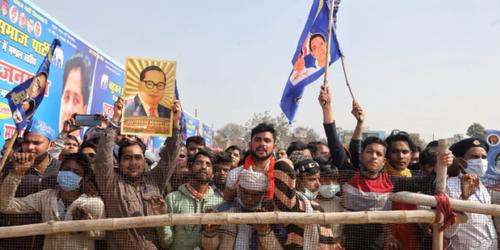
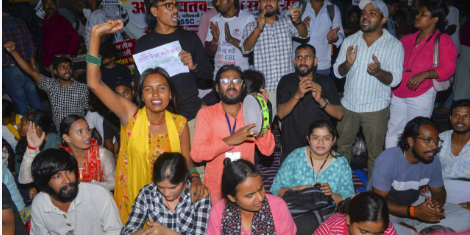
Since the 25th of July, the youth of Jharkhand have camped at the Jaipal Singh Munda Stadium in Ranchi. Clutching textbooks, photocopied question papers, and bundles of notes, which are standard tools for an aspirant’s preparation, are now doubling as props for a protest site. Devendra Nath Mahto, the Jharkhand Loktantrik Krantikari Morcha (JLKM) leader who began the indefinite hunger strike on August 2nd, spent India’s eightieth Independence Day fighting to leave a hospital room rather than celebrating outside it. He wanted to join the Tiranga Yatra the next morning, and yet again, the police stopped him.
The immediate cause for such an uproar was the 14th Jharkhand Public Service Commission Combined Civil Service Examination (JPSC-CCE) and the Jharkhand General Graduate Level Combined Competitive Examination (JSSC-CGL), which were compromised by leaks and irregular evaluation. On August 10th, under mounting pressure, the state government cancelled the JPSC prelims and two backlog exams, and three commission members resigned that same weekend. Yet the protest continues in its fourth week, because the question was never really limited to the irregularities of these government exams, but whether Jharkhand's public hiring system can be trusted to run fairly. Since the state’s creation in the year 2000, its recruitment exams have been dogged by a pattern of leaks, cancellations, and delayed results, which always follow the same pattern of agitation, protest, partial concessions, and then a new exam cycle that produces the same allegations.
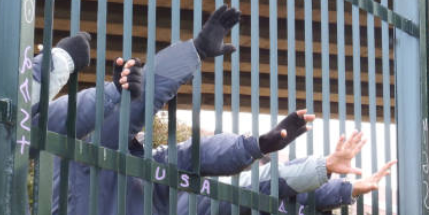
What makes 2026 different is the scale at which this protest has taken shape. The agitation is not isolated as it sits inside a much larger and leaderless national movement that began with the NEET-UG paper leak in early July and produced the Cockroach Janta Party, a protest formation organised almost entirely through social media. The CJP march near the Parliament House on July 20 was met with a lathi charge of its own. Sit-ins in Jantar Mantar and solidarity demonstrations as far as London and New York followed through for the rest of the month. A generation has done everything that they were told to do for results, stability, and a future: to study, compete, and wait, but the reward for all that effort keeps arriving compromised, late, or not at all.
If this cycle repeats in Jharkhand, and the evidence so far suggests it will, the state risks losing a generation of its most capable young people to a simple conclusion that state employment is a rigged system with no correction and hope in sight for the common people. Some will leave the state altogether, while others will disengage from institutional politics and put their faith instead in movements like CJP, which answer to no elected body and can mobilize faster than any government can respond to them. Every time a government concedes only after mass mobilization and violence, it teaches the next generation of protesters that peaceful, procedural channels do not work.
On August 19, the march was suspended by the leadership for 60 days, giving time to the Jharkhand government to work on its promises and agreements. But the truce didn’t last long, as the Jharkhand High Court overturned the cancellation of the 11th to 13th JPSC examinations, the Food Safety Officer examination, and the JSSC-CGL and the Child Development Project Officer (CDPO) examinations on 20th and 21st of August. This led to several clashes between the protestors, Jharkhand Mukti Morcha workers, and the Jharkhand police. The protestors accused the government of deceiving and mocking them.
Following this ordeal, Mahto, intending to cover all districts of Jharkhand, launched the “Bharti Vyavastha Sudhar Yatra” at Nemra village in Ramgarh District, with the aim of mobilising support from the public for employment reforms, examination reforms, and the preservation of employment rights. The tour is meant to cover all 24 Districts of the state. As the Yatra continues, the question persists: Will there ever be structural reforms that do justice to the public, or will this movement end with another deceiving strategy and new false promises?
This article is authored by Soha Aijaz, pursuing her B.A.LL.B (Hons.) in Law from Jamia Millia Islamia.
Edited by Omama A Talha
Disclaimer: The opinions expressed in this Publication are those of the author. They do not purport to reflect the opinions or views of The Jamia Review or its members.