The Ban on Satluj: can a reiteration of the past be too sensitive for the present audience ?

Sufia Siddiqui
Published

Is the Indian audience too sensitive for an honest film bringing the discussions of police brutality, political discourses, caste violence and genocide that has happened in this very country by its own people or the government fears a sound and aware citizens ? In recent years, India has seen bans and censorship of films, lack of artistic freedom and infiltration of political agendas into the art. When films with little to no accuracy are celebrated, and allegorical or biographical films that depict real events and issues of the country are banned or redacted to the point the authenticity and the artistic vision is lost, where does artistic freedom stand in this country then?
In January of 2025, the film Santosh directed by British-Indian filmmaker Sandhya Suri was set to release. The film is set in north India where a widowed woman, Santosh who joins the police force investigates the murder of a young Dalit girl. The film is persistent in its raw portrayal of misogyny, violence against Dalits and the darker side of the Indian Police force. The film was banned in India despite receiving applause internationally.
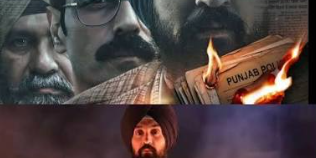
In July of 2026, another film was taken off by the censor board after the filmmakers struggled for years for its theatrical release. The film is Satluj directed by Honey Trehan starring Diljit Dosanjh.
Satluj which was previously named “Ghalughara”, a historical punjabi term associated with massacre of Sikhs in 1746, 1762 and 1984, by the recommendation of the CBFC then changed to Punjab’95 and now to Sutlej, depicts the life of Shaheed Jaswant Singh Kharla who was a human rights activist. He investigated the cremation of thousands of unidentified bodies that happened in Punjab between the years 1984 to 1994. The film was set to release in 2023 in theaters but after unreasonable cuts and censors recommended by CBFC, the filmmakers found a loophole and released the uncut version on the OTT platform Zee5. The film was taken down shortly in India, while it is still available to watch in other countries.
Media in any form is not merely for entertainment, it inspires, educates and tells stories unheard to us or hidden from us by the government. Now more than ever, censorship and bans across media platforms are increasing– suppression of independent media channels, films documenting corruption of administrative powers, books that pose differences in ideological viewpoints are banned. The country with cultural, lingual, and religious differences every few villages, the same country’s government does not consider differences of challenging and opposing viewpoints in cinemas.
Sutlaj does not oppose the ruling government, it exposes the merkier side of the administration that runs our country. The same administration that is designed and bound by constitution to protect people of this country exploits us at their convenience and to what extent. The film does not diminish or conceal the horrifying truth of genocide of sikhs. Through Jaswant Kharla’s character and his discoveries, it lays out the brutality that was unleashed on the people of Punjab as cleanly as the filmmakers could. This is what makes censorship nowadays; not to protect children from harmful content, not to release communal films like kashmir files or kerala story– no these are the films that are encouraged; and the ones that critique administrative powers and their misuse are banned or censored.
A question that kept coming up was “Why the current government is backing a ban that discusses a genocide that happened in the opposition’s rule?” and the answer to this is the ruling party holds accountability graver administrative misuse. When a film like Maachis by Gulzar can be released in the aftermath of the Genocide, when the wounds were still raw and fresh, when there was a chance of a communal upheaval, then why decades later the film Sutlaj was banned ?
A criticism of the administration is a criticism to the government. When people watch films of police brutality and violence, they will know how corrupt the system was and how corrupt it still is because the acts of violence by the administrative powers never ends. The people, in the present, will see that the situation of our administrative system is still the same, the police still terrorize lower class citizens who have no power or awareness of their rights, they still get harmed physically and psychologically without any justice, at times they are rewarded with more harm than justice.
Police brutality has often been touched upon in Indian cinema, but scarcely does it depict the scale of damage it does to common, ordinary people who cannot withstand an authority with power. When the people of India can suffer the direct result of brutality, discrimination, and violence, then it is granted that the Indian audience can stomach truthfulness and authenticity in cinemas. The bans nowadays are more political than protective. When our freedom of speech and expression is compromised like many other rights, we need to establish firmer codes on which cinema is offensive and which is acceptable.
Sufia siddiqui is pursuing a Bachelor's degree in English from Jamia Millia Islamia
Edited by Japleen Kaur
Disclaimer: The opinions expressed in this Publication are those of the author. They do not purport to reflect the opinions or views of The Jamia Review or its members.