Protests have been part of India’s legacy and history since pre-colonial years. Activists in different time periods have been marching and chanting on streets from way back in history. From Satyagraha for Independence by Mahatma Gandhi to Candle Marches for Jessica Lal by Sabrina Lal to now, with sit-down silent protests in the entire country.
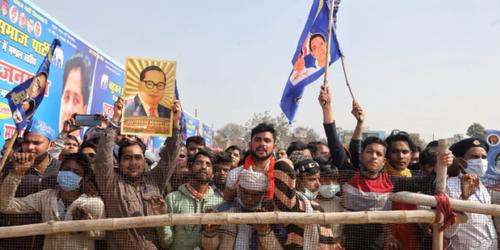
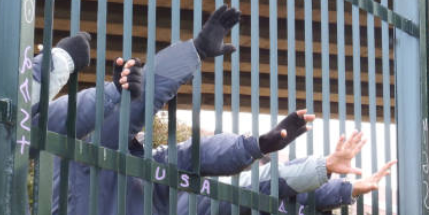
Ever since December 13, 2019, Anti-Citizenship (Amendment) Act (CAA) protests started in India. Despite the lack of a leading national face for the movement, there is still prominence in the resistance. Similar to the evolving leaders of revolution, the methods of promoting unity among protesters have changed too. The movements have traveled from Sarojini Naidu and Dushyant Kumar to Aamir Aziz and Varun Grover. “Sab Yaad Rakkha Jaayega”, “Hum Honge Kamyaab” and “Hum Kaagaz Nahi Dikhaaenge” have given voice to protests in the country. Recently, Pink Floyd’s Roger Waters recited a translated version of Aziz’s ‘Sab Yaad Rakkha Jaayega’. Regardless of the scrutiny poetry has had to face in order to conform to a popular narrative, it has been sung, reproduced and painted on placards to become the voice of dissent.
The controversy surrounding, ‘Hum Dekhenge’ by Pakistani Poet Faiz Ahmad Faiz, threw up questions around the interpretation, misinterpretation and disintegration of art. Complains of dissent were filed against the song being sung at protest venues in India and it was declared ‘Anti-Hindu‘ by IIT-Kanpur. However, that did not stop it from becoming a nationwide hum of unity. Despite Uttar Pradesh Government’s alarming steps to crush the Nawabi art of Qawwali in Lucknow, ‘Hum Dekhenge’ is often heard in the now renamed Atal Chowk, earlier called Hazratganj.
In addition to being the voice of the oppressed, poetry has also been a medium of expression for young budding artists, regardless of the monitoring. Social media has been overflowing with visual and literary art from various sects of the society. Since the emergence of rap in India, it has also found a space in the anti-CAA protests. 2019’s Gully Boy soundtrack included a rap song called “Jingostan Zindabad”, which is often performed by local rappers in Mumbai at the Gateway of India. Similarly, a video emerged of students surrounded by Delhi Police singing about “Lathi-charge halka halka hota hai” before singing the Azadi Song. Up until February, Anubhuti – The Dramatics society of Shri Venkateswara College, performed a self-composed satirical song called “Jhanki Saji Ram Ki”, based on communalism. Now celebrated poet, Aamir Aziz, found fame through his first poem “Jamia Ki Ladkiyan”, written as an ode to the female students of Jamia Millia Islamia, who bravely fought against communal violence on campus.
“You thought you’d turn us away from the sunset,
because the orange would remind us of you.
But we look at the sunrise,
reminded that the red within us is what will liberate us.
And like the sun,
every morning, we rise.”
This poem might not be familiar to you, and that is the beauty of today’s resistance. Regular students from all sects of society produce art to show solidarity with the movement. In the words of Dushyant Kumar, “Mere seene me nahi toh tere seene me sahi, ho kahi bhi aag lekin aag jalni chahiye.”
Eishita is a first year student pursuing Literature at Maitreyi College, DU.