
Right to Disconnect Bill 2025
Imagine that right after a gruelling day at work, you are on your way back home, prepared to leave the workday behind and make use of the remaining hours after sundown to steal some time for yourself, but just before that blissful imagine seeps into the realm of reality, the ring of a work phone call or the buzz of an email shatters all plans into a million pieces. We live in a time where constant availability is seen as commitment, and prioritizing work over self is given a pat on the back. But behind all the compliments and achievements, we all pay a silent cost of self.
For millions of formal workers in India, it is a well understood norm that even after formally logging out, if the phone buzzes, one must answer. A message during dinner, a “quick call” late at night, an email checked out of habit rather than necessity, these moments add over time and reshape how time is lived. People remain reachable because they fear that the cost of absence may be missed opportunities, subtle judgment or being replaced by a person more “available”.
When influential industry leaders, such as Infosys founder N. R. Narayana Murthy, advocate for even longer hours, suggesting that young IT workers should aim for 70-hour weeks to remain competitive, it encourages employees to take on tasks beyond official hours, normalizing overtime and creating pressure to remain constantly available
This bill recognizes the detrimental effects of the prevalent “Always on” culture. Post the pandemic, the rapid expansion of remote work, increased workplace flexibility and the heightened expectations of immediate responsiveness,makes employees increasingly exposed to mental fatigue, stress and burnout, underscoring the need for regulation of these changing work dynamics.
The bill applies broadly to all employees (in companies or societies) whose work involves constant digital communication, allowing employees to abstain from responding to work-related communications outside working hours. While employers may contact employees after hours, employees are under no obligation to reply and are legally protected from any disciplinary action for exercising this right.
This is a creation of an Employees’ welfare authority responsible for promoting employee welfare and implementing a nationwide framework for out-of-work arrangements. Organizations with more than ten employees are required to create individual charters or policies through consultation with employees, unions, and representatives. These policies should specify detailed arrangements for out-of-work hours, considering varying work cultures, industry practices, and employee needs. Employees retain the right not to be contacted outside mutually agreed working hours. Employees who voluntarily work beyond their official hours are entitled to overtime pay at the standard wage rate, ensuring they are not deprived of this right under any circumstances. Additional welfare measures include digital detox centres to support employee well-being and establishment of “employee welfare committees”.
The concept of disconnecting from work finds its roots in Article 24 of the Universal Declaration of Human Rights (UDHR) which states that ‘Everyone has the right to rest and leisure, including reasonable limitation of working hours and periodic holidays with pay.’
France became a trailblazer in 2017 by enacting the Right to Disconnect as part of the El Khomri labour Law, requiring companies, especially larger ones, to negotiate with unions to ensure employees are not pressured to be online after hours, helping combat digital burnout and protect work-life balance. While this concept is prevalent in other Western countries such as Belgium, France, Ireland and Australia, India now joins other jurisdictions to explore such an initiative as legislation under the Indian law framework.
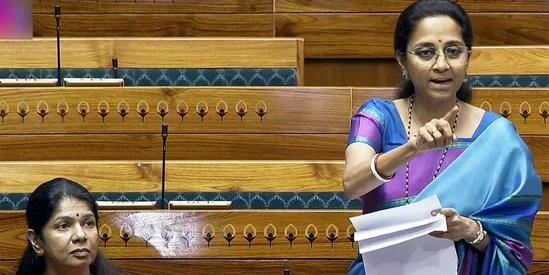
The private member bill was first introduced in the parliament by MP Supriya Sule in 2019. The bill did not gain assent due to vague provisions and lack of a clear approach towards the objective of the bill. Thereafter the bill was reintroduced with revised and updated clauses in December 2025 during the winter session of the parliament. Similarly, the Kerala Right to Disconnect Bill, 2025, introduced by the Kerala government, aims to protect private sector employees by legally allowing them to ignore work-related digital communications after official hours.
As established above, the scales have tipped towards the professional commitments over personal time and leisure, which has detrimental effects on the physical and mental well-being of an employee. Although the courts are yet to interpret the scope of the right to disconnect, it can be broadly interpreted as a manifestation of Article 21 of the Indian constitution, which guarantees the right to life and personal liberty. The expression “life” connotes not mere animal existence but leading a life of dignity, right to livelihood, better living standards and adequate leisure.
To fully grasp the state’s obligation towards the right to disconnect the article 21 can be read alongside the articles 38,39,42,43 and 47 which although non-justiciable, collectively establish the states’ responsibility to promote social justice, humane conditions of work, and the protection of workers’ health.
Differing work commitments, for instance professions such as security, legal services, journalism and media, healthcare, and emergency services, require round-the-clock availability, making a uniform measure of working hours impractical across various fields.
The economic context of India further complicates this issue, as small businesses working long and harder to capitalize growing opportunities contribute to a work culture that prioritizes extended hours and high levels of commitment, making the establishment of a right to disconnect both challenging and contentious.
One of the most important issues is the payment of overtime at the ‘normal wage rate’, which is contrary to the existing labour laws/codes that mandate overtime payment made at ‘twice the normal wage rate’. This will further create legal inconsistency, adding to confusions and disputes.
Additionally, the Bill remains silent on certain practical and procedural aspects that are crucial for effective implementation, particularly sensitive matters such as the manner in which negotiations are to be conducted, the details regarding the constitution of employee welfare authorities, committees and digital detox centres, any grievance reparation mechanism in case of non-compliance or any disputes raised by employees who face retaliation or repeated out-of-work hours communication, and whether the states will be allowed to make any exemptions through their corresponding rules.
The fate of the Bill may remain uncertain, but the real achievement is that this issue has resonated with millions of Indians navigating the relentless corporate grind. A right to disengage at mutually agreed times helps re-establish balance between work and the self and ensure that technological advancements do not erode the core values of human autonomy and well-being.
Soha Aijaz is studying Law at Jamia Millia Islamia
Edited by Arslaan Beg