
This article examines the recent wave of parliamentary defections in India, where the Tenth Schedule’s merger clause has converted a constitutional safeguard into a route around it. Tracing the Trinamool split into the Nationalist Citizens Party, the Shiv Sena defections styled Operation Tiger, and the Aam Aadmi Party’s Rajya Sabha losses, it argues such transfers sever the continuity between electoral mandate and parliamentary conduct on which representative democracy depends. A comparative turn to Malaysia and the Westminster tradition shows two opposed remedies, statutory penalty against voter reckoning, neither fully adequate, though only one returns the final judgment to the electorate.
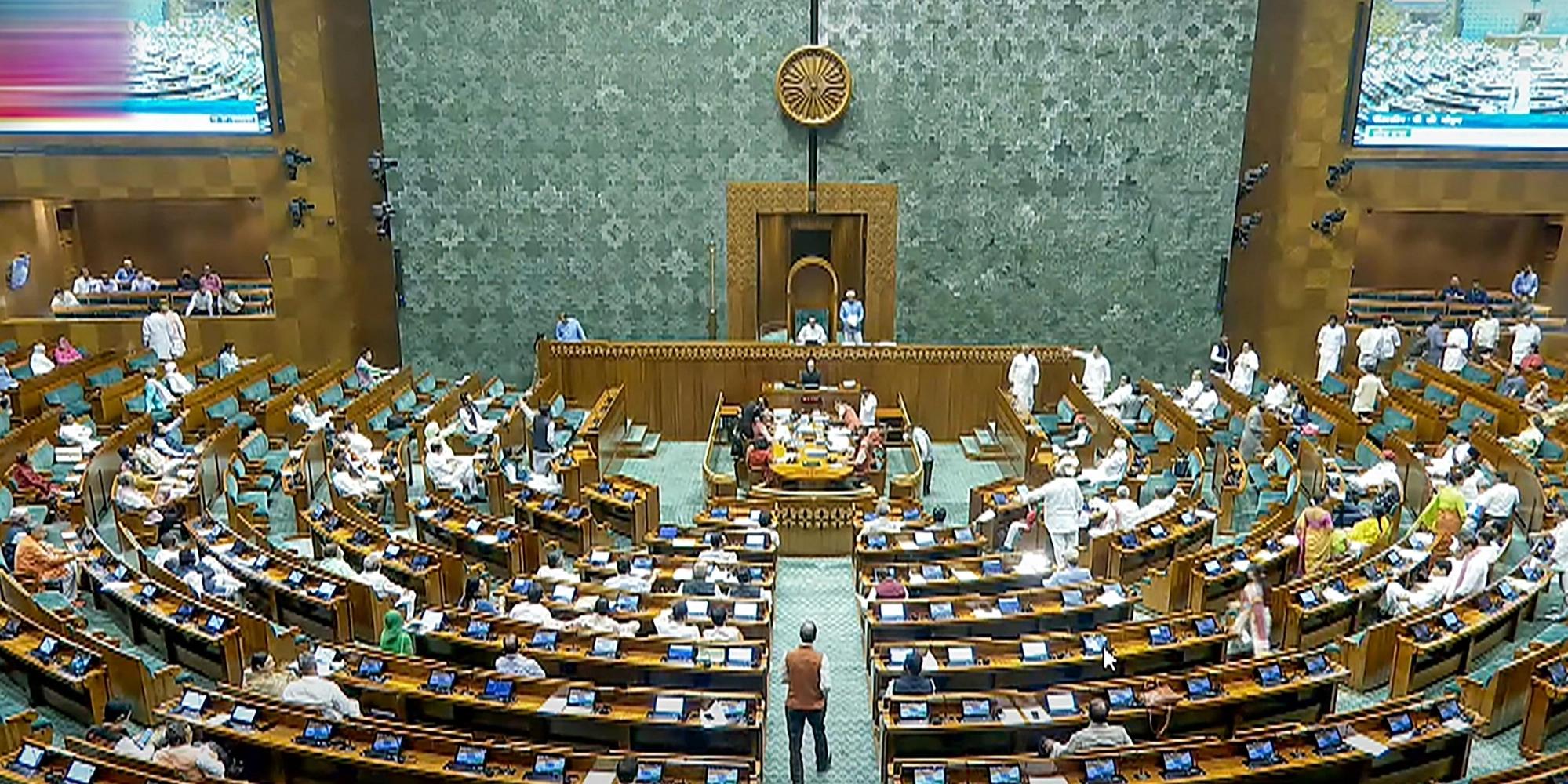
Politics, like literature, often repeats its own stories, and the current situation in the Indian Parliament has become almost ritualistic. Recently, 20 of the 28 members elected to the Lok Sabha from the Trinamool Congress realized, after their party lost in West Bengal, that their loyalties now lie with a party based in Tripura called the Nationalist Citizens Party of India. This party’s entire electoral history could be counted in a few hundred votes. The term defection hardly fits when two-thirds of a party distances itself from the charge. The legality of this move doesn’t stem from conviction but from a clause in the Tenth Schedule that allows mergers to bypass disqualification. What was meant to block opportunism has become, through its own loophole, a gate that lets opportunism through with legal approval.
A similar incident in Maharashtra makes this pattern hard to see as mere coincidence. Six of the nine Lok Sabha members under Uddhav Thackeray’s Shiv Sena have switched to the rival faction led by Eknath Shinde. The receiving party has openly labelled this move as Operation Tiger, treating the capturing of representatives as wildlife management rather than a blow to representative government. The name suggests a hunt instead of a reunion and reveals something the creators likely did not intend to show. It casts the defectors not as converts but as secured by other means. Claims that money running into tens of crores changed hands before the switch adds an uncomfortable reality to the metaphor. Three of the six openly admitted that their move aimed to secure funds for their constituencies. This reasoning turns representation into a transaction and leaves voters wondering what their initial vote purchased.
In another case, seven of the ten Rajya Sabha members from the Aam Aadmi Party merged into the Bharatiya Janata Party using the same process. The ruling coalition’s pursuit of these individuals is closely connected to its goal of achieving the two-thirds majority necessary to amend the Constitution, something they failed to attain in April. They have sought to build this majority not by convincing voters but through acquiring their representatives. In this light, numbers represent not a true victory but a substitute for it. What cannot be secured at the ballot box is collected later in the lobbies if one waits long enough. Meanwhile, the average number of sitting days in the Lok Sabha has dropped from over 130 annually in the 1950s to about 55 today. This decline forces lawmaking into haste and deprives important bills of the scrutiny they received in earlier years. With members bought and sold openly and rushing to secure a majority for passing laws by sheer strength, no one in the chamber seems to have time left for discussion.
The more significant question here is not whether such transfers are legal, as the law surprisingly allows them, but whether an arrangement permitted by law can still align with the principle it was created to uphold. A voter who marks a ballot next to a party’s symbol chooses not only a name but also a program and identity that the member is supposed to uphold in the legislature as a trust. Democracy depends on the connection between the mandate given and the conduct that follows. When that connection breaks, what remains is empty representation, a shell without the ideology it was meant to carry, still occupying a seat and drawing a salary. The member who switches sides for a price hasn’t changed his mind in a way conscience usually demands, for conscience does not typically ask for fifty crores as the price for awakening. What seems like realignment from one perspective looks from another like turning public office into private property, sold at whatever the market for defections is offering.
It’s simplistic and flattering to the electorate to blame this corruption solely on the defectors, as the system rewards defection more reliably than it rewards loyalty. A system where loyalty to voters leads to nothing, while disloyalty brings ministries, funds, and protection from disqualification, has set up incentives against the very virtues that democracy requires. Therefore, it shouldn’t surprise us when enough people choose the path encouraged by these incentives. A democracy that allows this to continue for too long will find its citizens no longer believing their votes matter. If citizens believe their votes are useless, they have little reason left to cast one. This is the slowest and least dramatic way a democracy can die.
The Indian experience becomes clearer when compared to other parliamentary democracies. This comparison highlights two opposing strategies for handling the same impulse, neither of which has entirely succeeded. Malaysia has tried to close loopholes by law. It states that a member who changes allegiance loses their seat immediately and must face their constituents again in a new election. This law was a response to the notorious Sheraton Move of 2020, when enough defections collapsed a sitting government overnight in a hotel rather than at the polls. It has also been challenged through 2026 by the issues surrounding Rafizi Ramli’s breakaway faction, whose members navigated the same constitutional loopholes exploited by Indian defectors, merging and regrouping in configurations designed to avoid the vacancy the law intended to enforce. The outcome in both Malaysia and India is not the elimination of defection but its transformation into a more complex legal disguise. The original parties have become splintered into weak remnants unable to regain their former standing.
In contrast, the Westminster tradition takes a different approach. It imposes no legal penalties on members who switch sides and argues that a member of Parliament represents constituents rather than a party and should be free to change loyalty. Here, the enforcement of discipline comes from consequences, not statutes. The electorate administers these consequences during the next opportunity they have. When Danielle Smith led a mass defection of Wildrose members into Alberta’s governing party in 2014, the voters who had sent those members to the legislature under a different banner punished the governing party severely at the next election. The governing party’s decades-long power did not survive the verdict. The defectors who formed Britain’s Change UK in 2019 faced an even swifter judgment, losing their seats within months, suggesting that voters without any legal system to demand immediate accountability will create their own response at the first chance they get.
What stands out from comparing these systems is not just the outcomes but the timing and responsibility for maintaining loyalty. In the stricter systems, like India and Malaysia, the burden falls on the legislature itself. In more flexible systems, the responsibility shifts to voters, who cannot be merged or organized into a qualifying fraction. Voters have shown, as seen in Alberta and Westminster, a readiness to impose penalties in ways no constitutional clause could have predicted. Neither arrangement hinders a politician determined to defect. However, only one gives the final say to the people who cast the initial vote. After examining the Indian case, filled with merger clauses and operations, we are left facing a silence that neither law nor precedent can fill. Do the people really rule? Do representatives truly represent? And if neither is true, what exactly does “democracy” signify?
Joel K. Albert is pursuing English from Jamia Millia Islamia
Edited by Arslaan Beg