A wave of misinformation, censorship and the manufacture of discursive warfare: A year to India’s Operation Sindoor

Habeeba Haneef Mohammad
Published

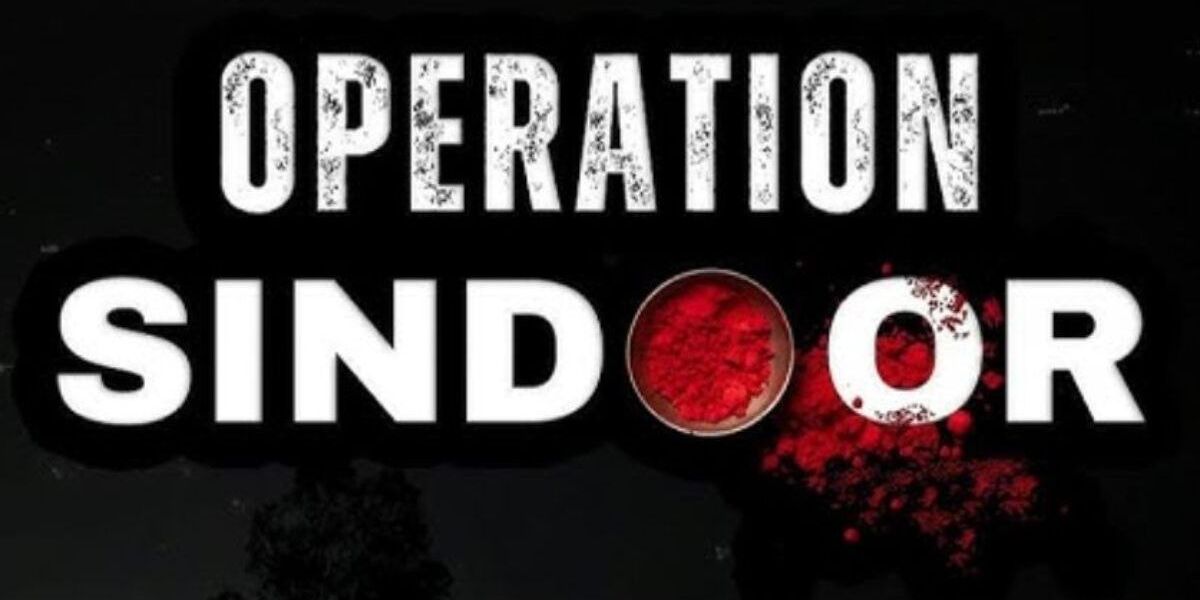
What followed India's launch of Operation Sindoor, on the night of 7th May, 2025, was a war, not just of missiles but a war of narratives, orchestrated in headlines, thumbnails, and newsrooms. The battlefield was the media. With censorship, performative jingoism and blatant fabrication of narratives, Indians were found in a state of confusion, chaos and war hysteria. The dominant rhetoric transcends profits and TRPs. They shape larger discourses and manufacture consent.
7th May, 2026, marks a year since India’s Operation Sindoor, and what followed it was sensational headlines, fabricated visuals, exaggerated claims, and unrelated visuals that were all a part of prime-time bulletins following the launch of the operation on the night of 7th May, 2025.
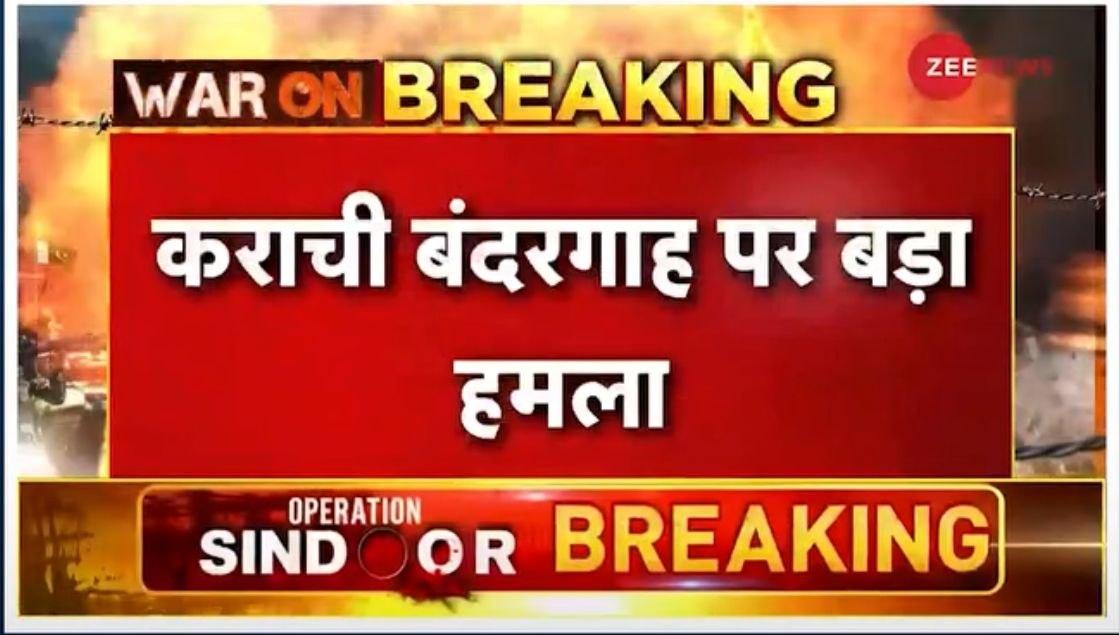
On May 9, 2025, several mainstream Indian news channels dramatically reported that the Indian Navy had destroyed Karachi port. The coverage was presented as exclusive breaking news, replete with sirens, distant artillery sounds, and dramatic visuals.
Aaj Tak’s Anjana Om Kashyap said on air, “…Karachi par bhi Bharatiya navsena ki bhishan hamla. Yeh saaf bata rahaa ki chaaron taraf se-ab hum sagar ke bhi taraf se gherna mein kamyaab ho rahe hai…” (Translation: There has been a fierce attack by the Indian Navy on Karachi as well. This clearly shows that we are now succeeding in surrounding them from all sides, including from the sea.) Two visuals were shown on Aaj Tak as the attack on Karachi, and both videos were found by Alt News to be old, unrelated footage.
A similar tone of reporting was adopted by Zee News anchor Ram Mohan Sharma, who said “breaking news” just came in that Karachi port had been destroyed. “Is waqt ek bohot badi khabar mil rahi hai, samundar se Pakistan par ek bada action liya gaya hai… Is waqt ki bohot badi khabar, badi jaanakari iss waqt ki Karachi port tabah kar diya gaya hai! Navsena ne, Navy ne Karachi port ko tabah kar diya hai…” (Translation: We’re getting a major update at this moment. A significant action has been taken against Pakistan from the sea. Breaking news right now, important information coming in… The Karachi port has been destroyed. The Navy, the Indian Navy, has destroyed the Karachi port.)
The Karachi port had been ‘destroyed’ in several other newsrooms on the night of May 9, 2025, including India Today, TV9 Bharatvarsh and ABP News. The following morning, around 8:40 am, the Karachi Port Trust issued an official statement calling the Indian media reports “completely false and baseless,” and confirmed that the port was “operating normally and securely.”
The Karachi port claim is only the tip of the iceberg, as far as media misreports go. For instance, Zee News, News18, News18 Bihar Jharkhand, OneIndia and propaganda outlet Sudarshan News all claimed that Islamabad was under attack by the Indian armed forces, which soon turned to Pakistani Prime Minister Shehbaz Sharif’s house being under attack. Zee News even claimed that Sharif had surrendered. However, there is not a single credible source from either country confirming the attacks on Sharif’s house. Nor is there any report or credible information on PM Sharif surrendering.
News outlets Mathrubhumi, DNA, OneIndia and Great Andhra published articles claiming Asim Munir, chief of the army staff, Pakistan, had resigned and was to be replaced by General Sahir Shamshad Mirza. Like the aforementioned examples, there was not a single credible source that affirmed this. Fact-checking outlet BoomLive spoke to Pakistani news outlet Dawn’s deputy editor Zahrah Mazhar, who said that there was no indication of Munir’s resignation.
Media outlets Firstpost, NDTV, Free Press Journal and The Statesman also reported on a deepfake video showing Ahmed Sharif Chaudhry, the director general of Inter-Services Public Relations (ISPR) of the Pakistan armed forces, admitting to losing two fighter jets amidst an escalating military conflict as a real statement.
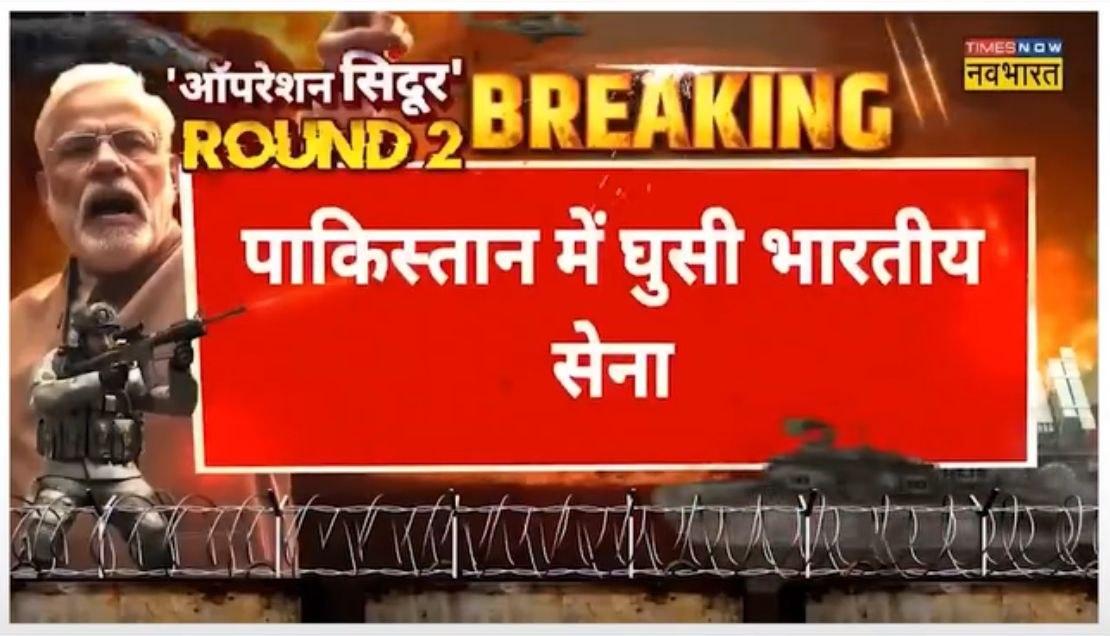
Alongside these, several unverified videos and images were aired by mainstream media outlets. For instance, a four-year-old video of Israel’s air defence system, the Iron Dome, was played by news channels with varied claims. Zee News, Times Now, Navbharat and others aired the video linking it to the purported Karachi port destruction, while some others, like Aaj Tak, aired the clip claiming it to be visuals from the attack on Jaisalmer.
Again, a video broadcast by ABP Ananda and TV9 Bangla, among others, purportedly showing the situation in Pakistan after a strike by the Indian armed forces turned out to be three-month-old footage from a jet crash site in Philadelphia.
Qari Muhammad Iqbal: A victim of war and dehumanisation by the mainstream Indian media.
Iqbal, 46, was a teacher at Madrasa Zia-ul-Uloom in Jammu and Kashmir’s Poonch district. He lived in the Baila village in the Mandi Tehsil of Poonch and was killed in cross-border shelling on Tuesday, local officials confirmed.
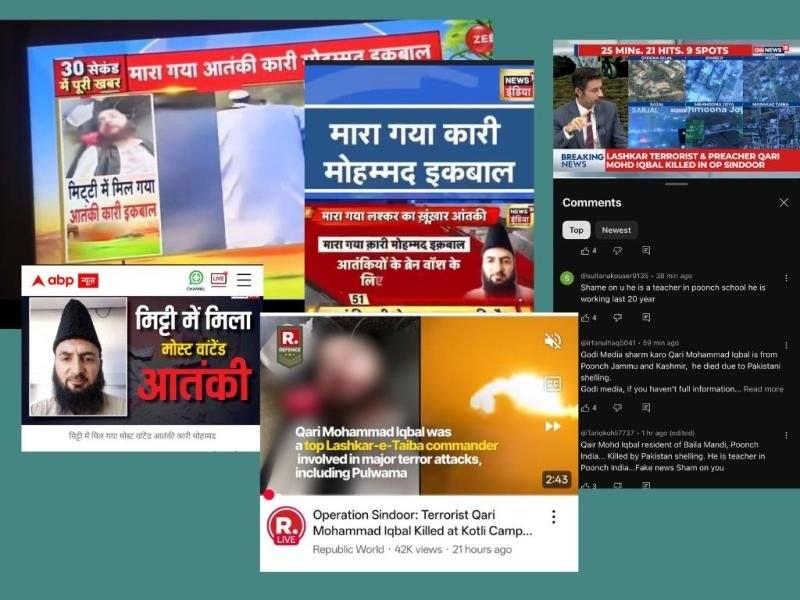
Several mainstream news channels, including Republic, CNN News18, ABP News, and Zee News, used Iqbal’s image, inaccurately identifying him as a “terrorist” who was “neutralised” by Indian airstrikes during Operation Sindoor. The reports went to the extent of claiming that Iqbal was hiding in Kotli, Pakistan, one of the locations targeted by the Indian armed forces in the operation and was involved in the 2019 Pulwama attack.
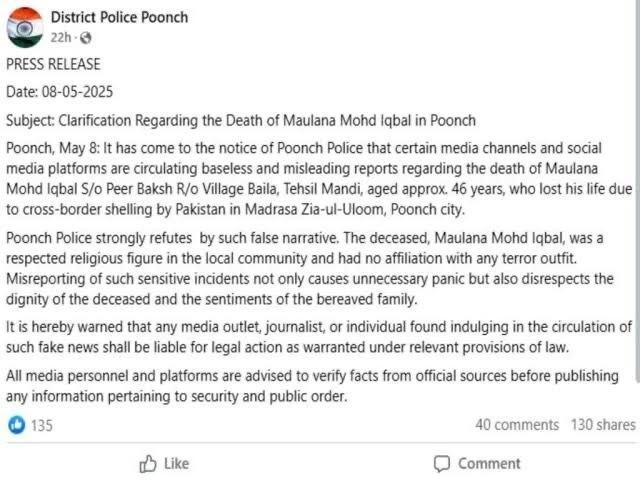
Iqbal’s family issued a statement condemning the blatant misinformation that was amplified by media channels. Poonch Police itself strongly refuted the false narrative, calling the reports “baseless and misleading”.
The misreporting of the conflict crossed all limits of fakery, dishonesty and war mongering, studios were converted to mendacious war-rooms where all manner of fiction was concocted: the destruction of Karachi port, the occupation of Islamabad, Pakistan Prime Minister Shehbaz Sharif surrendering to Indian forces, the imminent fall of Rawalpindi, even the bombing of Kirana Hills and Pakistan’s nuclear installations and the release of radiation (denied by the Indian Air Force and the International Atomic Energy Agency, respectively).
On innumerable occasions, they showed unrelated, old visuals in adrenaline-driven prime-time shows, falsely linking them to the ongoing conflict, without any verification, causing confusion, panic and loss of credibility.
Amidst this chaos and hysteria, came a move by the Indian Government that was seen as an attack on press freedom and free speech.
X announced on 8th May, 2025, that the Union government has ordered it to block 8,000 accounts on its platform in India and that, despite its disagreement with these orders, it has begun complying with them.
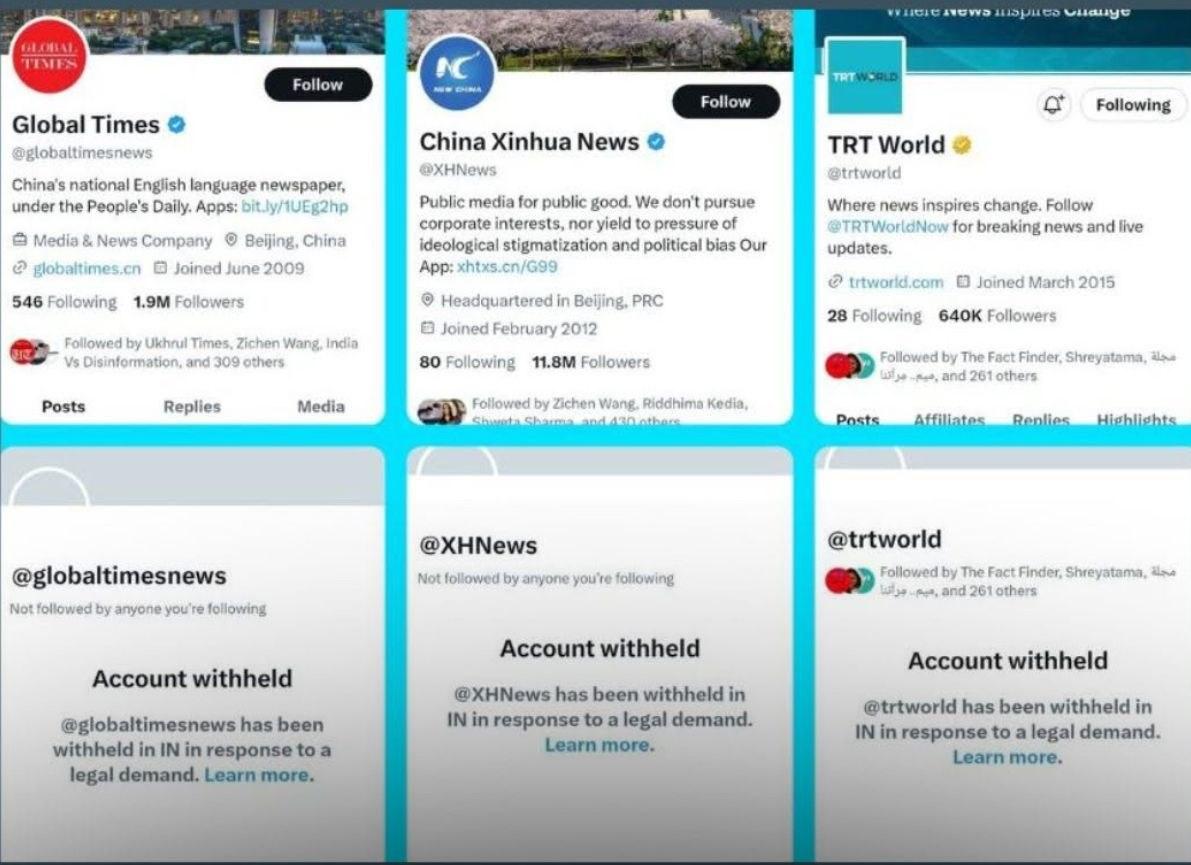
The platform’s announcement comes as some journalists and news organisations had their X accounts withheld in India in response to the government’s legal demands. These included the X accounts of Maktoob Media, BBC Urdu, Free Press Kashmir, The Kashmiriyat, Outlook, Global Times, Xinhua News, TRT World and journalists Muzamil Jaleel and Anuradha Bhasin.
In most of the over 8,000 blocking orders the government issued, it “has not specified which posts from an account have violated India’s local laws”, X’s Global Government Affairs department posted. It added: “For a significant number of accounts, we did not receive any evidence or justification to block the accounts.”
“We disagree with the Indian government’s demands,” X said, even as it noted that it will withhold the accounts concerned in India to comply with the orders.
“Blocking entire accounts is not only unnecessary, but it also amounts to censorship of existing and future content, and is contrary to the fundamental right of free speech,” it said. “This is not an easy decision, however keeping the platform accessible in India is vital to Indians’ ability to access information”.
Calling the ban an assault on press freedom, Maktoob’s editor, Aslah Kayyalakkath, wrote on X: “We have no knowledge of the reason for the government’s arbitrary action. Maktoob pledges to continue its crucial work at a time when truth is becoming a casualty.”
Aslah told The Wire that while the reason for the ban is unclear, he has received at least 50 threat calls over Maktoob’s coverage of the hate speech and revenge attacks against Muslims and Kashmiri students.
Kayyalakkath added, “The government wants only the war-mongering and jingoistic media. Even one union minister has shared one such fake post.” The minister in question is Kiren Rijiju, who had incorrectly claimed on X that the Navy had attacked Karachi.
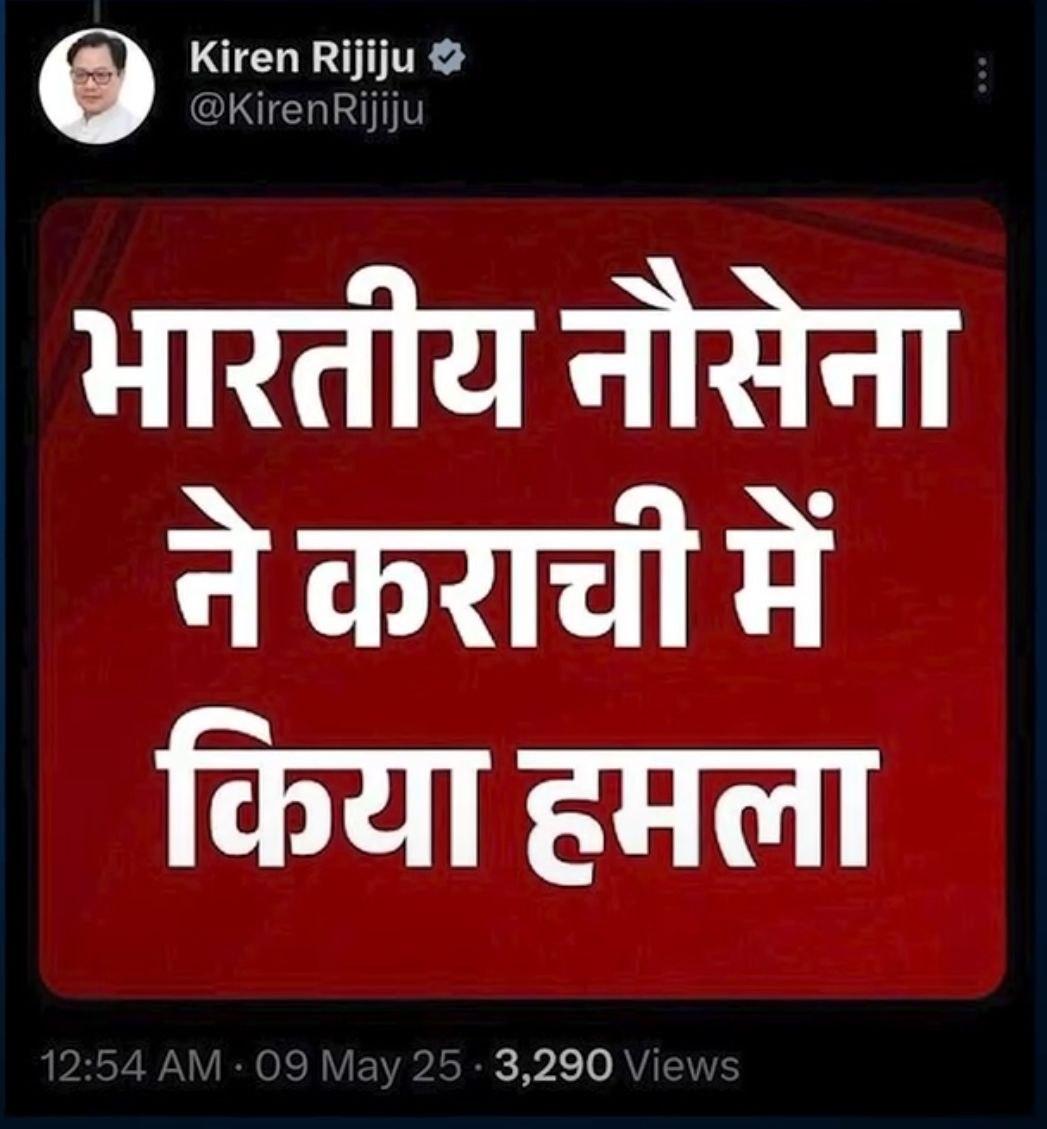
The move was widely condemned as an assault on press freedom and a tactic to silence critical voices, while mainstream media, accused of indulging in warmongering jingoism and spreading fake news, continued to operate without consequences.
What happened was the culmination of what scholars call discursive warfare — the deliberate construction of identity, legitimacy, and power through language. In the hands of Indian media, every act of violence was scripted, every image curated, every casualty politicised. It wasn’t coverage, it was choreography.
The media constructs an identity by selectively highlighting threats and sacrifice; it renders some lives as grievable and others as expendable. Once the ‘Other’ becomes a caricature, dialogue dies, diplomacy becomes weakness, compromise becomes betrayal, and war becomes not just possible, but desirable.
While missiles flew, people died, civilians in Kashmir, on both sides, were killed, border villages were shelled, religious sites damaged, innocent people displaced, but these stories, the human stories, were buried beneath the rubble of rhetoric.
The media during wartime plays a central role not only in communicating events but also in constructing discursive frameworks through which war is understood and justified.
Habeeba Haneef Mohammad is a student pursuing Sociology from Jamia Millia Islamia
Edited by: Omama Abu Talha
Disclaimer: The opinions expressed in this publication are those of the author. They do not purport to reflect the opinions or views of The Jamia Review or its members.