
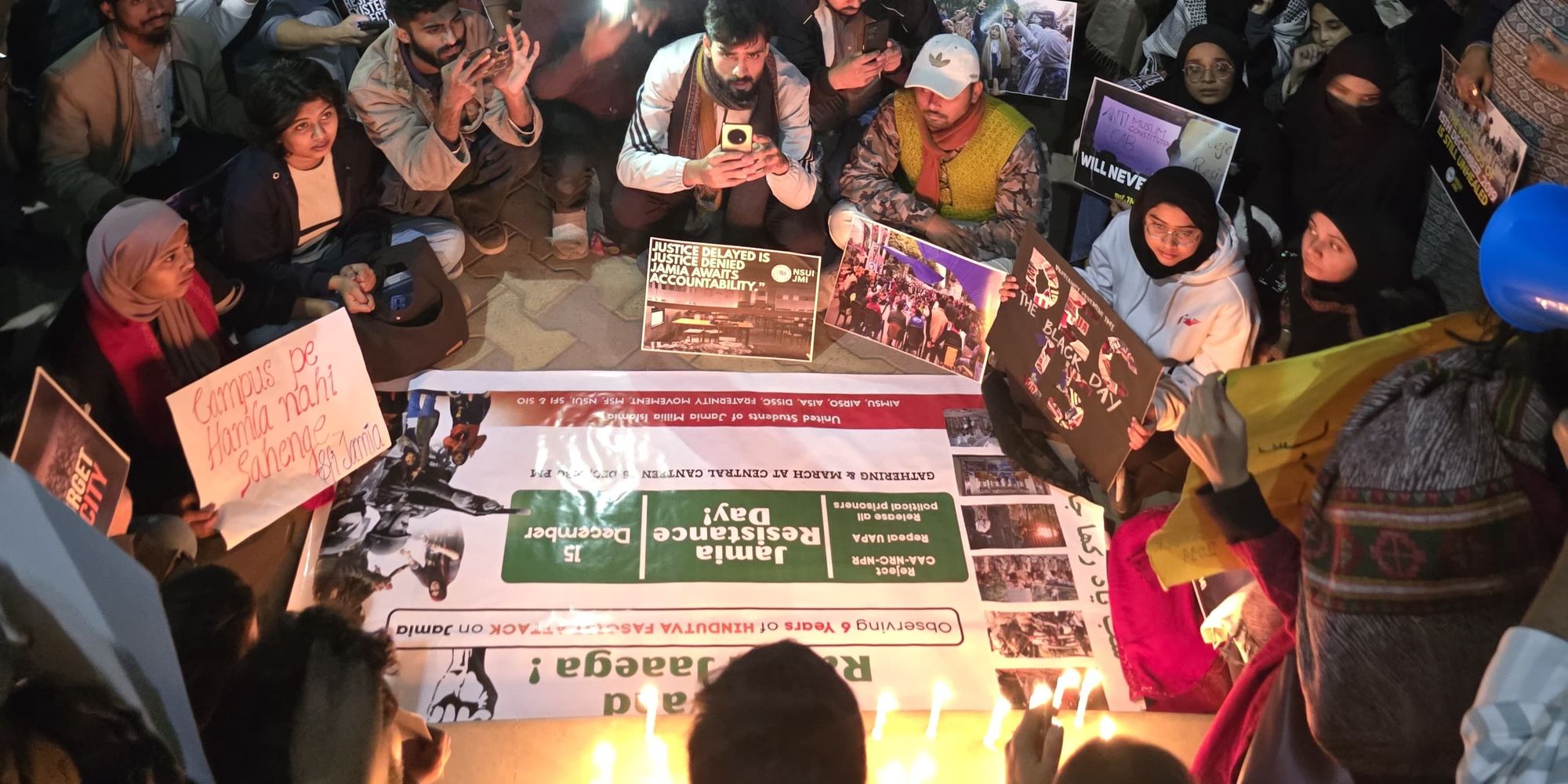
Chronicles of state-sponsored education within Jamia
Six years have elapsed since we witnessed a peculiarly educative moment in our institutional chronology. On the evening of December 15, 2019, at about 6:30 PM, the Delhi Police showed their passion for higher education by offering students at Jamia Millia Islamia a practical tutorial in the domain of constitutional law. The methodology was indeed innovative: tear gas between bookshelves, lathi charges in reading rooms, and a seminar on fundamental rights conducted through bruised skin, broken bones, and smashed windows.
All the problems began when the students dared to exercise their freedom of speech, which also encompasses the right to criticise any enactment, in this case, the Citizenship Amendment Act, a legislation that granted expeditious citizenship to persecuted minorities of neighbouring nations. The students staged a procession on December 13, and the police, showing remarkable restraint, only used tear gas and batons. The young students, with the typical attitude of ingratitude, gathered again on December 15, daring to oppose institutional excess.
Without bothering to seek permission from the university authorities, considering that, well, paperwork is such a dull, mundane bureaucratic technicality, the Delhi Police entered the Jamia campus that evening. Destination? The Zakir Husain Library, a notorious safe haven for subversives, where students were engaged in the heinous activity of studying. Video evidence, captured before mindfully disabling CCTV cameras, shows police systematically educating students on the executive authority of the state.
The curriculum was rigorous. Students were taught about tear gas inhalation and the tensile strength of wooden batons against human flesh. Those trying to escape through windows learned about desperation. Those trying to find refuge in bathrooms got special lessons on door-breaking skills. Roughly fifty students were arrested that night. Some had to be hospitalised, including two with bullet wounds. However, the police made it clear that they did not fire any shots. The bullets seemed to have materialised out of imagination.
Six years have flashed by right in front of our eyes, but one cannot help but admire the exquisite effectiveness of the Indian judicial system. Not a single policeman associated with such an arbitrary assault on students has been subjected to accountability. None of the injured students has received any monetary compensation, which is a sign of remarkable cost-consciousness. The recognition of the malfunctioning of the CCTV cameras was just a technical deficiency. The vanished evidence, buried in the red tape symbolic of the vanished accountability of the whole system.
Student activists were served show-cause notices and given suspensions for the ‘offence’ of being assaulted on the campus of their own institution. Overall, impeccable jurisprudence.
The attack on Jamia nevertheless led to protests all over the country, which again is a clear indication that there are still people who refuse to learn their lessons accurately. Even today, students of Jamia Millia Islamia, remembering the ‘Black Day ’, conduct marches for memorials. Their refusal to forget is very inconvenient for the people who prefer to be historically amnesic. Students plead for a semblance of accountability, demonstrating their belief that the institutions built to protect power might also protect the people.
Perhaps that is the underlying lesson: not the fact that the government could barge in and unleash force against unarmed students, but the fact that students managed to live through the violence and kept on questioning. The windows of the library were fixed. Students arrived back and are still learning, organising, and displaying the belief that another world is possible.
How inconvenient it is for those who counted on fear to teach them silence.
Sritama Chakrabortty is a student pursuing Law from Jamia Millia Islamia.
Disclaimer: The opinions expressed in this publication are those of the author. They do not purport to reflect the opinions or views of The Jamia Review or its members.