The Nation Walks on the Graves of Its Forgotten Patriots
India’s freedom struggle was never a single story told by a single set of names. It was a collective movement shaped by people from different regions, classes, and faiths, many of whom paid a heavy price for freedom but did not find a place in popular memory and became victims of selective erasure from history. Over time, the national narrative narrowed. Some sacrifices were repeatedly commemorated, while others were quietly buried and walked upon, along with the people who made them.
Among those pushed to the margins are several Muslim freedom fighters whose contributions were undeniable, documented, and invaluable, yet remain largely unknown to the wider public today. This is not an attempt to romanticise the past or reopen historical debates, but to acknowledge a simple truth: the freedom of India was a shared struggle, and its memory has become selective. This article is a minute step towards revisiting the original history and silent protest against the erasure of heroics of true patriots.
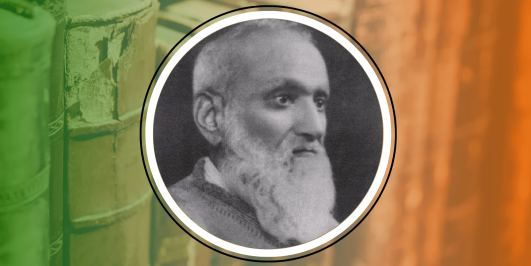
Maulana Obaidullah Sindhi: physically far yet emotionally close to his nation’s struggle, has been one of the most prominent personalities amongst Muslim revolutionaries in the Indian freedom movement. Maulana Obaidullah Sindhi entered India’s freedom struggle not through public platforms, but through underground resistance and international strategy. Trained as an Islamic scholar, Sindhi believed that British imperialism could not be dismantled through petitions alone. During the First World War, he became a key figure in what later came to be known as the Silk Letter (Reshmi Rumal) Movement, a clandestine plan to coordinate an uprising against British rule with the help of foreign powers such as Afghanistan and the Ottoman Empire.
When British intelligence uncovered parts of the plan, several leaders were arrested or exiled. Sindhi spent many years outside India, moving between Afghanistan and nearby regions. Life during this period was unstable and difficult. He had no fixed base, no organisation supporting him, and no assurance that his efforts would ever be recognised. Unlike famous nationalist leaders, his work was done quietly and often in uncertain situations. It required ongoing personal sacrifice.
While he was abroad, Sindhi reflected on the type of freedom India should strive for. He was influenced by socialist ideas and thought that political independence alone wasn’t sufficient. In his opinion, freedom had little value if regular people still faced inequality, poor working conditions, and a lack of land rights. He discussed these issues well before they entered the main political conversation in India.
After independence, Sindhi did not benefit from power or privilege. His revolutionary methods, international alliances, and uncomfortable ideological positions made him difficult to accommodate within post-colonial narratives. As a result, a man who dedicated his entire adult life to India’s freedom is today remembered only in limited academic and Urdu scholarly circles.
Abdul Bari, another forgotten patriot, was a prominent scholar of the Firangi Mahal tradition in Lucknow, who played a crucial yet understated role during the Khilafat and Non-Cooperation movements. At a time when communal tensions threatened to fracture the national movement, Bari worked actively to translate political ideas into mass participation mobilising students, scholars, and ordinary citizens. Firangi Mahal under his leadership became not merely a centre of religious learning but a space for political coordination. Bari supported the Khilafat–Non-Cooperation alliance not as a symbolic religious gesture, but as a strategic effort to strengthen anti-colonial unity. He maintained close engagement with Congress leaders and consistently emphasised Hindu–Muslim cooperation as essential to resisting British rule.
Unlike charismatic mass leaders remembered for speeches or arrests, Bari’s work was largely organisational behind the scenes, demanding, and invisible. British authorities kept a close watch on his activities, recognising the influence he wielded through networks rather than slogans.
After independence, figures like Abdul Bari were sidelined by history. They neither founded political dynasties nor occupied high office. Their contribution: building trust, unity, and structure during critical moments did not translate into public monuments or textbook chapters. Yet without such organisers, mass movements would have struggled to sustain themselves.
Rafi Ahmed Kidwai represents a different but equally important strand of the freedom struggle as the Congress organiser and institution-builder. A close associate of Jawaharlal Nehru, Kidwai was deeply involved in Congress politics in the United Provinces and participated actively in Civil Disobedience and other nationalist campaigns. Rafi Ahmed Kidwai was jailed several times and was deprived of any colonial honors, choosing sacrifice over comfort. Kidwai briefly served as a Union Minister following independence, but he never pursued it as a career or personal legacy.
Despite being close to important leaders and events, Kidwai's lack of recognition in popular culture is startling. He worked in administration, mobilization, and quiet dedication; he was neither a flamboyant speaker nor a mass icon. Such individuals are easily forgotten in a time when individual heroes are becoming more and more important.
The marginalization of such entities serves as an example of how commemoration frequently prioritizes visibility over involvement. Their narrative serves as a reminder that freedom was not only attained by individuals whose names are frequently mentioned in public discourse, but also by those who persevered, exercised self-control, and made numerous sacrifices to keep the movement going.
These three lives different in method, geography, and ideology tell a common story. They reveal how Muslim participation in India’s freedom struggle was diverse, deeply rooted, and inseparable from the nation.
Farhan Usmani is studying Psychology at Jamia Millia Islamia
Edited by Arslaan Beg