The Poriborton rekindling Bengal’s bargain with Democracy: Unravelling the politics of division and polarisation that follows.

TJR Team
Published

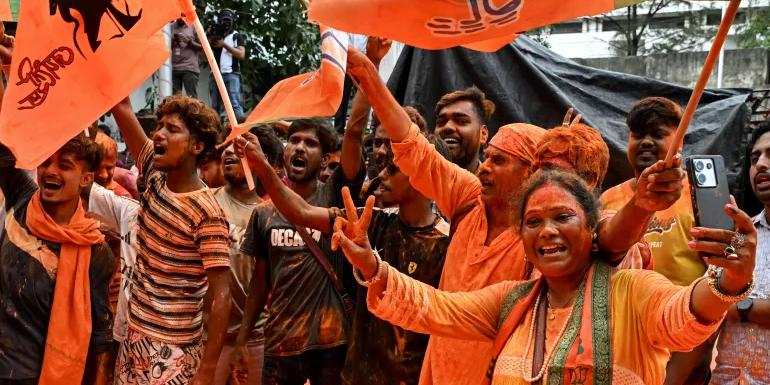
The State assembly elections of 2026 recorded a transformative mandate, leading to the collapse of 15 years of Trinamool Congress rule anchored by Mamata Banerjee, who assumed power in 2011 by defeating the Left. While the 2026 mandate resulted in the victory of Bharatiya Janata Party for the first time in Bengal, this success seems to have been driven by a cumulative range of factors - public dissatisfaction over corruption, institutional breakdown and economic stagnancy. However, it is essential to note that the BJP’s rhetorical messaging during the election campaign surrounding “border infiltration” from Bangladesh, as well as their identity politics specifically appealing amongst the Bengali urban elite (Bhadralok), seems to have substantiated in the transition of electoral sentiments within the wider arena of contemporary Hindutva politics harboured by the BJP. However, the post-poll violence, inflammatory rhetoric and vandalism have raised concerns over a politically charged, divisive Bengal, exacerbating communal tensions and eschewing away from the historically secular notion within the psyche of the Bengali community. This article incorporates the testaments and statements of students belonging to the Bengali community.
Democracy represents a civilizational wager for us, a covenant between the Sovereign and its determinants, underpinned by the sanctity of the ballot and the accountability of those who seek its mandate. West Bengal’s 2026 election verdict shattered that covenant by ending 15 years of Mamata Banerjee’s rule, a tenure that began as a thunderous promise of poriborton and calcified, inexorably, into the very architecture of corruption it had vowed to dismantle.
Mamata’s ascent to the throne of Bengal in 2011 was seismic. She rode into Writers’ Building waving a genuine ripple of popular exhaustion, displacing a Left Front that had suffocated Bengal for thirty-four years. What followed was the Didi model, a hyper-centralised machinery where personal loyalty trumped institutional governance. The Saradha chit fund scam, the Narada sting, WBSSC recruitment scam, illegal coal and cattle smuggling networks, each layer peeled back to reveal the same rot underneath, marginalising ordinary depositors who had trusted the system. Over 6,600 companies shifted their registered offices out of Bengal during the tenure, leaving behind an outstanding debt estimated at ₹8.15 lakh crore. In the 2026 State Govt. elections, she was defeated in her own constituency, Bhawanipur- a seat destined to protect her following Nandigram by over 15,000 votes. Fifteen years of TMC governance thus came to an end with the BJP taking 200 seats in a 294-member assembly.
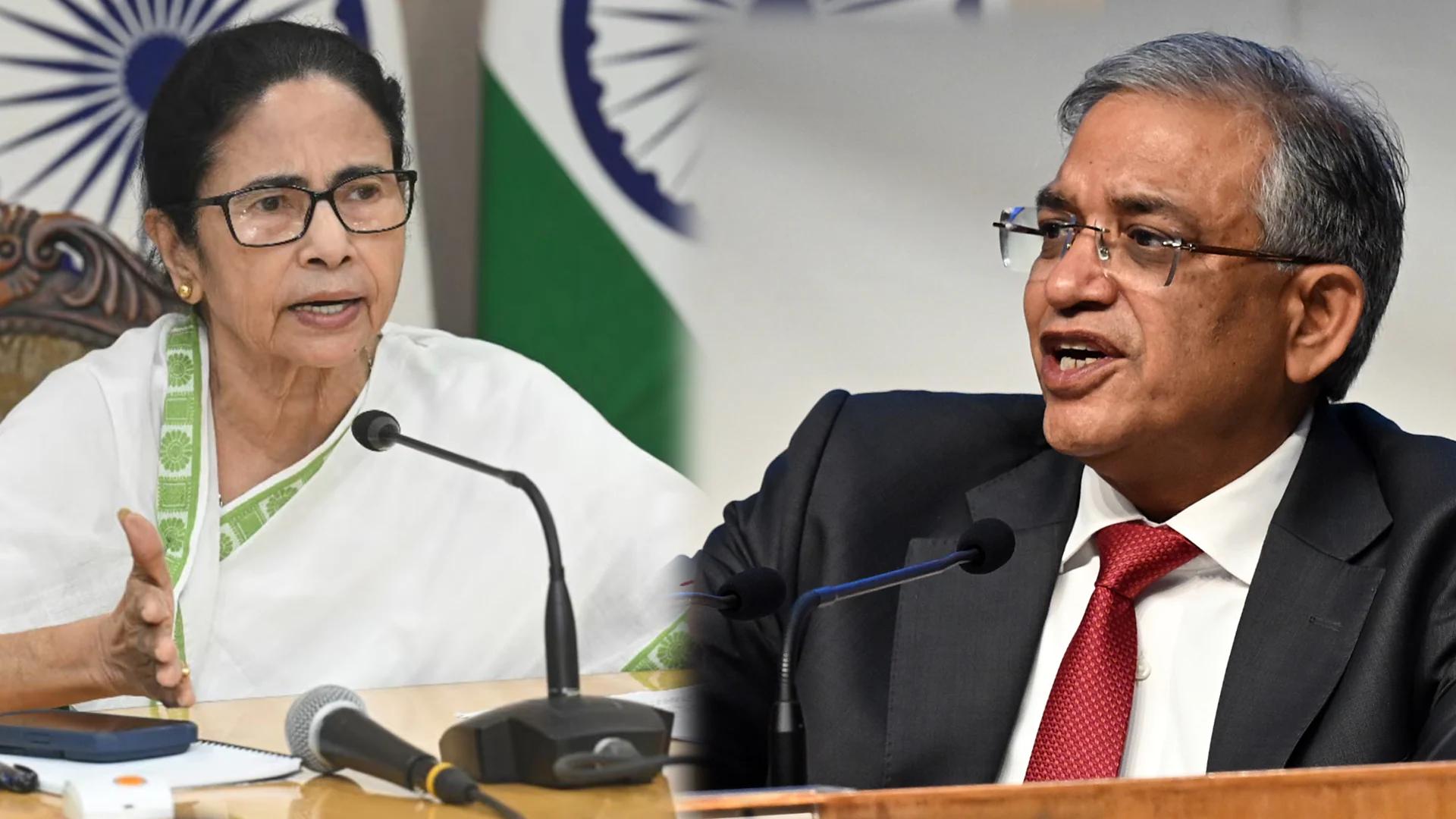
The verdict was, however, delivered through a process that no honest reckoning can overlook. The SIR deleted voters at a degree and specificity that cries out for serious scrutiny. In Nandigram, where the Muslim community comprises some 25 percent of the population, more than 80 percent of the deleted names were from the community itself. Yogendra Yadav described it as a “targeted political exercise” as Bengal is the only state where exclusions were followed by massive electoral deletions with nearly 27 lakh voters being struck off through a process unprecedented in the Election Commission’s history. An observer bluntly stated: “This is an undeclared war against WB citizens, starting from SIR, communal binary, transfer of officers, one-sided EC, hate speech, deployment of 19 BJP CMs and half the cabinet - it was not an election.”
Another Bengali student from Jamia noted that out of 35 members in his family, over 60 percent found their names deleted, names traceable to the 2002 rolls, despite attending hearings with complete documentation. “The future of democracy looks visibly dark, if eligible voters are being removed despite proper documentation.”- Soham Halder, a Master’s student at Jamia, further named the structural stakes plainly: “The tentacles of oppression will only manifest into saffron with BJP’s divisive politics tearing apart the fabric of secularism that was always ingrained in Bengal” Sajahan, another Jamia student, turned the critique toward the Left, arguing that by becoming “electoral rather than movemental”, by choosing to contest rather than protest the SIR deletions, the left itself played a role in BJP’s win, abandoning the very constituencies it claimed to represent.
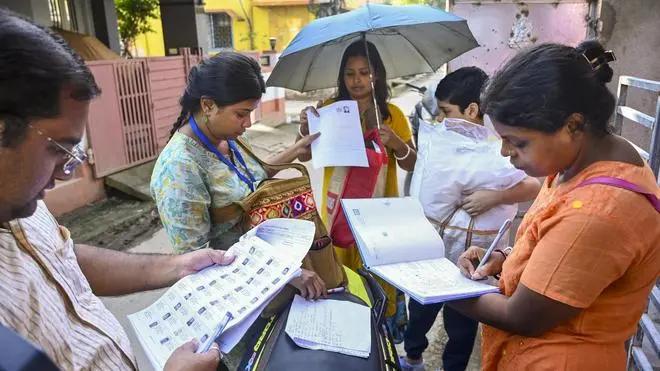
One student’s question cut through both celebration and mourning with uncomfortable precision: people voted to bring justice for Abhaya, the RG Kar victim, yet chose a party whose representatives carry declared charges of harassment, including five with rape charges. “Are we actually walking away from corruption,” she asked, “or are we just white-painting everything because of communal hatred?” Another statement by Sajahan was grimmer: “Since the Union Govt. could not apply NRC, they applied SIR. There was a specific margin by which the BJP lost to the TMC in the last assembly elections, and that margin was proportional to the arbitrary deletion of voters from the SIR rolls in those constituencies. This was just a policy BJP used to manipulate and secure their win in Bengal.”
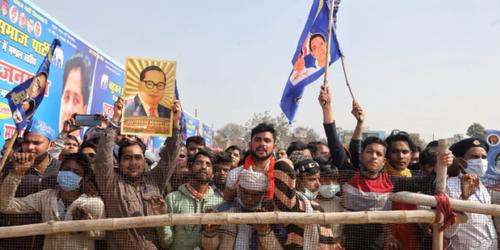
The situation seems bleak and polarised, with over 4 political workers killed in post-election clashes, party offices burned, a mosque vandalised, and bulldozers deployed across Kolkata within hours of the result. The incoming CM, Suvendu Adhikary, a former aide of Mamata Banerjee who switched parties in 2020, openly engaged in polarising rhetoric by stating that “the entire minority muslim vote” has gone in favour of TMC in Nandigram; “they are Kattarwadi (fanatical)” - he added whilst proclaiming that his success is a victory of “Hindutva”. Adhikary allegedly levelled contentious remarks stating that there was no requirement of a “minority morcha” within the party organisation and openly demanded “thieves and goondas” implicating his political opponents to be left to his reign. It is thus undeniable that such politically galvanising, vengeful and divisive polarisation with specific targeted speeches against opposition political wings and minorities would further seep a sense of communal division, thereby contravening the secular fabric of Bengal in the coming days.
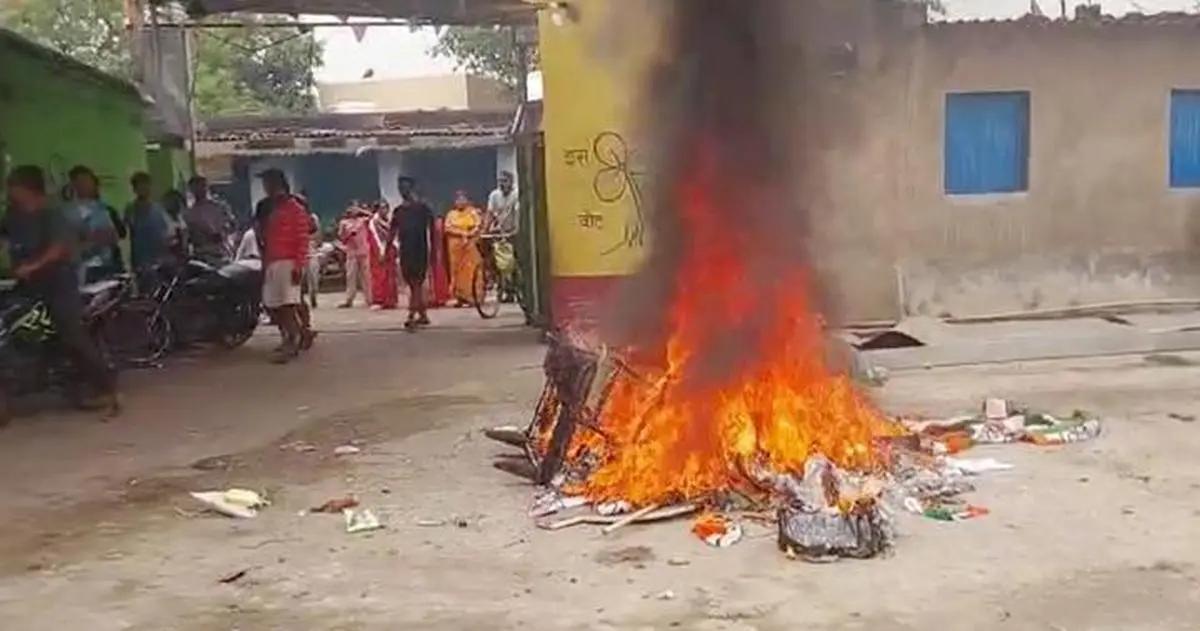
A wave of turbulence has already erupted in Bengal following the BJP’s victory. Mr Adhikary’s PA has been shot dead following a series of events, which he has referred to as “pre-planned murder” by the TMC. Party cadres with jhandas and lathis have already vandalised a Lenin statue in Murshidabad, engaged in beating TMC cadres in multiple parts of Bengal and inflicted destruction on opposition party hoardings. Both the BJP and TMC have claimed that their workers have been killed by the other party during post - poll violence. Signs of destruction and arson have arisen in the state with TMC offices being set on fire whilst videos have come up where a bulldozer is being used by party cadres to demolish meat shops in the iconic New market area of Kolkata - it is thus, evident in the light of such incidents that, the newly elected government is either willingly striking a pattern of intimidn or is completely failing to control the institutional machinery that ought to regulate “law and order” in the state.
The poriborton of 2011 promised emancipation, development and liberation whilst delivering a different captivity. Whether the 2026 state assembly delivers renewal or merely a more ideologically charged form of the structural dysfunction with politically charged, divisive rhetoric, will not be presumed in the euphoria of May. It will, as many Bengali students of Jamia conjure, be answered in the quieter, harder, more unforgiving years that ought to follow.
Sritama Chakrabortty is a student pursuing Law at Jamia Millia Islamia.
Neelormi Ray Chowdhury is a student pursuing English Hons at Jamia Millia Islamia.
Edited by: Habeeba Haneef
Disclaimer: The opinions expressed in this publication are those of the author. They do not purport to reflect the opinions or views of The Jamia Review or its members.