
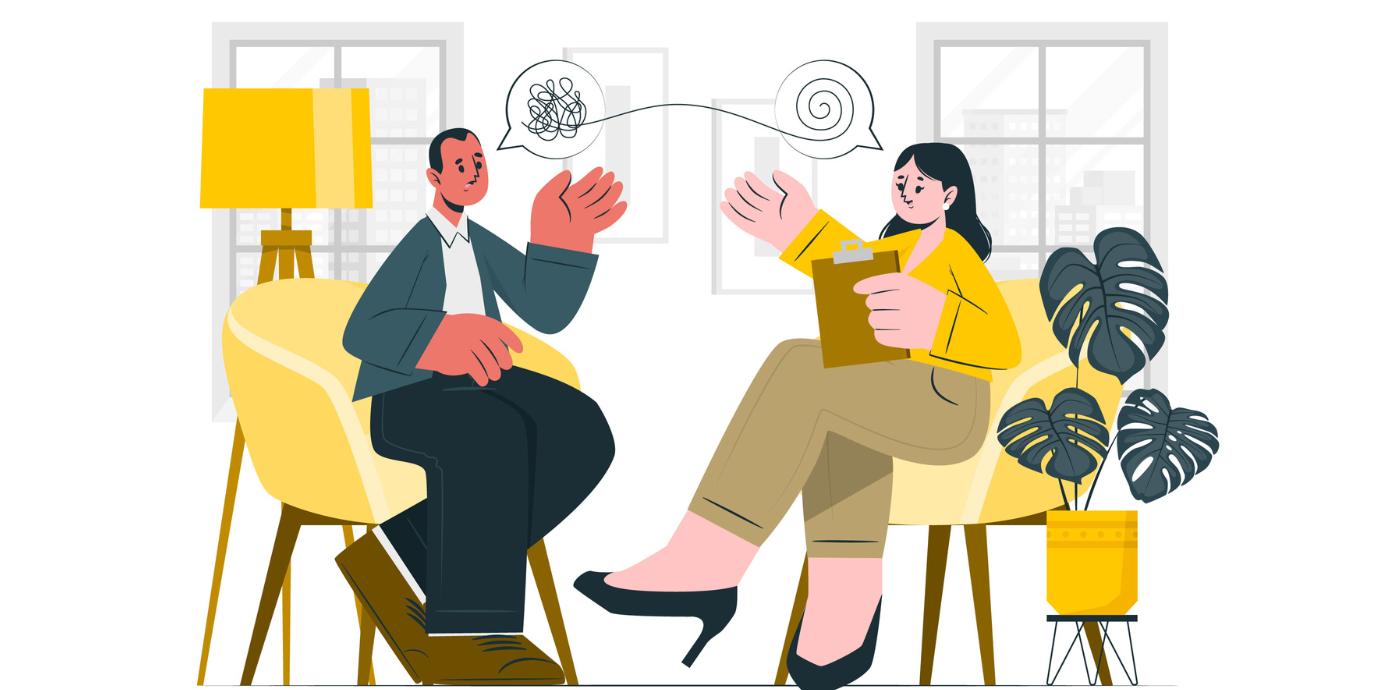
In an age of increasing attention on “healing,” therapy-speak has become a watered-down trend, stripping real psychological concepts of their meaning. Buzzwords like “toxic,” “gaslighting,” and “cutting off” now replace genuine communication, leaving people more confused and emotionally isolated than ever. While mental-health awareness is rising among the younger population, it is half-knowledge that fuels emotional avoidance and superficial resolutions. The damage of therapy-speak can only be counteracted through honest dialogue, critical thinking, and learning from evidence-based sources, instead of some influencer-packaged wisdom.
In today's age of social media and rampant information dissemination, hundreds and thousands of reels and videos pop up on our devices where psychological phrases and words are used
without any depth or understanding. Words like “toxic”, “manipulative”, “boundary”, “gaslight”, “trauma bonding”, etc., are used colloquially like exclusive linguistic wallpaper, which means nothing but everything, at the same time, to the young generation. This casual use of the language typically found in therapy rooms is what is known as therapy-speak.
The younger population, instead of actually understanding the psychological terms, picks up and uses these words in their daily life, complicating simple conversations and causing much more conflict (internal as well as external) than intended. This explains why everyone on the internet seems to be self-diagnosed with an “avoidant attachment style,” treating it as a trend, and why people so readily label themselves or others as “narcissists,” as if narcissism were not a serious personality disorder with deep underlying features beyond a single selfish act. These people, instead of understanding and having simple conversations, use such sophisticated terms in their jargon that even a simple feud between friends remains unresolved. Why? Because some YouTubers on the internet asked them to “cut off” people who don’t match their “frequency” or don't appear to be “accountable”, so as to “protect their peace”, without having to confront the person.
There is no doubt that the younger population of the modern world are increasingly aware and does not shy away from spreading awareness about mental health and well-being. Psychologists find this a better situation as compared to the prior stigma surrounding mental health. However, the increasing use of therapy-speak or psychobabble on social media has raised some important alarms. One report that evaluated 500 TikTok videos with the hashtags #mentalhealth or #mentalhealthtips found that 83.7% were misleading (for instance, delivered by a non-health care professional without that disclosure) and 14.2% included messages that could be damaging (like encouraging people to take medication without consulting with a doctor). A whopping 100% of videos about ADHD were misleading, the health care professionals who coded the videos concluded. This shows a growing trend of non-psychological professionals using therapy-speak to their advantage, making mental health awareness an empty rhetoric and a consumerist fluff.
Many YouTubers and influencers now encourage viewers to live in complete emotional isolation. Relationship and friendship conflicts are treated as the end of the world problems, with no right way to resolve them. Confrontation is dismissed as unnecessary “drama.”Apparently, sitting with your feelings and expressing them has become cringe, all over again. It is now seemingly easier to cut someone off entirely than to explain how they hurt you. The resolution to every other problem is to be a lone wolf and carry on with life, minding your own business, protecting your peace, and healing your inner child. This may sound like an ideal situation to the viewer, but in the long run, it renders people lonesome and full of feelings and emotions unresolved, and words unsaid. What individuals accept as solutions to their problems are just unhealthy coping mechanisms, disguised as empowerment, doing more harm than any good. The consequence—no one is healing, no one’s inner child is restored, and no one’s peace is protected. Hence, therapy-speak becomes commodified, serving influencers rather than individuals’ well-being.
However, this does not mean that these psychological terms are just for psychologists or those associated with the field. No way is a therapist saying that talking about attachment styles is just his forte. There has never been an intention of gate-keeping information because such information can actually help people connect with their feelings and thoughts, and attain a better understanding of themselves, as well as that of others. It is half-knowledge that kills. We are a lazy generation with very little attention span. This is unfortunate but not unchangeable if only we set our minds to it. Reading about these psychological terms, gaining real-time information from valid, evidence-based sources can prevent unnecessary confusion and help people stay connected to their emotions and those of others. There is no need to shut someone out just because confrontation looks impossible, or that their “frequency” doesn’t match yours, or that you assume they won’t understand. You can agree to disagree and go on in life without making things much more complicated than they actually are. This is precisely why dialogue, critical evaluation and media literacy are extremely important to counteract the damage of therapy-speak.
Sharmeen Shah is a student pursuing Psychology from Jamia Millia Islamia.
Edited by: Omama Abu Talha
Disclaimer: The opinions expressed in this publication are those of the author. They do not purport to reflect the opinions or views of The Jamia Review or its members.