Beyond Mob Lynching: Systemic Violence and the Erosion of Minority Subjectivity in India.

TJR Team
Published


Mob lynching in contemporary India reflects a deep crisis of law, morality, and constitutional values. Rather than being spontaneous acts of crowd violence, such attacks are driven by organized hatred and ideological encouragement, disproportionately affecting Muslims while also targeting other minorities such as Christians and Dalits. Using data from the South Asia Justice Campaign and insights from Rochana Bajpai, the discussion shows how minority rights lack firm philosophical grounding and function through political consensus. Legal, political, and social practices increasingly treat Muslims as conditional citizens, undermining their subjectivity and political agency, and reducing them to objects of suspicion rather than equal participants in India’s democratic life.
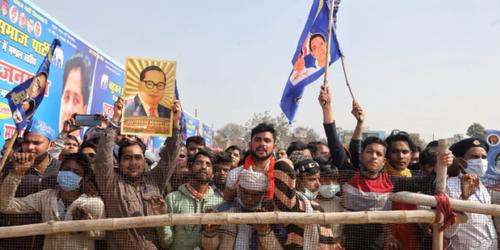
Mob lynching is one of the most brutal and shameful forms of violence in present-day India. It represents a complete breakdown of law, morality, and humanity. When a crowd takes the law into its own hands and punishes a person based on suspicion, rumours, or prejudice- justice is replaced by cruelty. In a country that prides itself on constitutional values and the rule of law, the growing incidents of mob lynching raise serious questions about social conscience, political responsibility, and collective morality. The South Asia Justice Campaign (SAJC) documents mob lynching and religious violence in India through its India Persecution Tracker, reporting at least 50 extrajudicial killings of Muslims in 2025, many involving state forces or Hindu extremist groups.
The media calls these incidents “mob lynching,” but this term does not correctly explain what is happening in India. These violent attacks do not happen suddenly or by accident. They are the result of planned hatred and repeated encouragement of violence by Hindu nationalist groups. Muslims are not the only minority groups which are being targeted by them but other minority groups such as Christian, Dalits also face similar levels of atrocities. Christians symbols were thrashed during Christmas in public places by mobs who were believed to be the protectors of Indian culture. Public places are supposed to be shared by everyone and function as neutral spaces, but when the signs and symbols of public places begin to reflect only one community and are claimed by it alone, the constitutional promises start to appear as merely rosy sentences in a book.
This problem compelled us to look into the provisions for minority rights in the Constitution. As referred to by Rochana Bajpai, she argues in her work Debating Difference: Group Rights and Liberal Democracy in India that the minority rights provided in the Constitution are not strongly backed by philosophical reasoning; rather, they emerged from a political consensus to grant certain rights to minority groups in a pluralistic society. This lack of philosophical reasoning gives a sense of superiority among the majority, who tend to believe that minorities should (must) live and act according to their will. It is a structural process to snatch the subjectivity of minorities to live in this country under the protection of the Constitution. Muslim subjectivity in India is compromised primarily through legal, political, and discursive practices that treat Muslims as conditional citizens rather than autonomous political subjects.Laws and policy frameworks, along with earlier constitutional and administrative practices, place the burden of proof disproportionately on Muslims to demonstrate loyalty, legality, and belonging. This turns citizenship from a guaranteed right into a test of legitimacy, where Muslims are constantly asked to explain, justify, or dilute their religious and political identity in order to be accepted as “Indian.”Muslim subjectivity is further compromised through dominant narratives that divide Muslims into “good” and “bad” categories—those who are compliant, silent, and assimilated versus those who assert political claims and are labeled extremist, anti-national, or separatist. This framing operates through what scholars call racialized governmentality where Muslims are controlled not just through laws, but also through social norms, public expectations, and ideas of nationalism and secularism that appear neutral while actually excluding them. As a result, Muslims are often reduced to either passive victims of violence or objects of reform, rather than recognized as agents capable of shaping the present and imagining political futures. This systematic denial of agency ensures that Muslim identity remains visible as a problem, but invisible as a legitimate subject of politics in India.
Sharique Akhtar is pursuing Sociology from Jamia Millia Islamia.
Edited by Arslaan Beg